
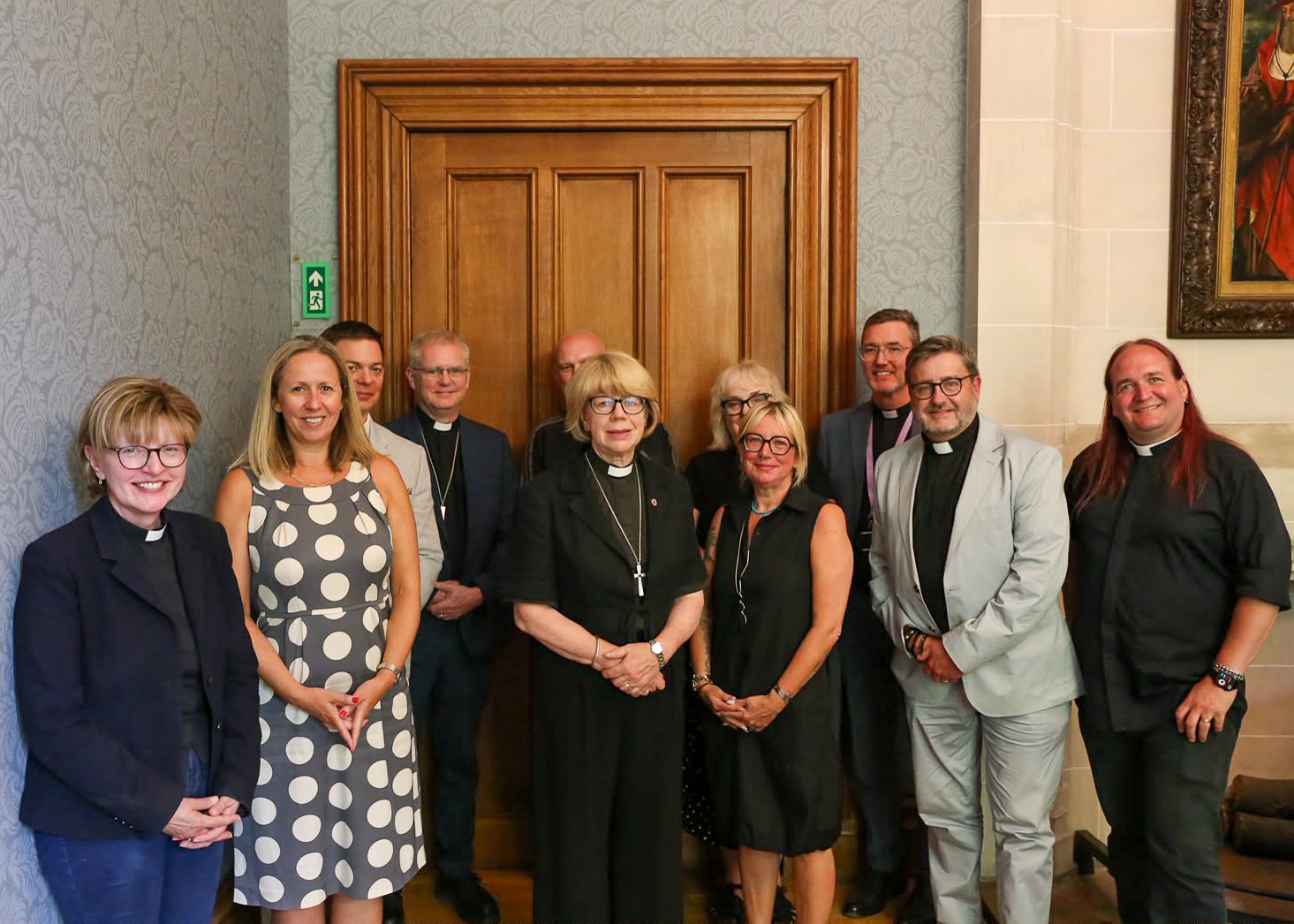
“When I had lunch with the Archbishop of Canterbury…” is not a phrase I had imagined ever saying. It was a great privilege to be invited; along with the Working Class Vocations Task Group, to Lambeth Palace to talk with the Archbishop and others who shape ministry pathways in the Church of England. As part of EETG for more than a decade, working class vocations have long been part of our agenda. Thanks to Alex Frost, General Synod have agreed that we must act to ensure that we “raise up a new generation of lay and ordained leaders from estates and working-class backgrounds”. What this highlights is how important it continues to be for our working class voices to be there at General Synod ensuring that our Church of England reflects the country it serves as well as our beliefs about the body of Christ.
When I spoke at General Synod in February, much was made of my punchline and the response from ++Sarah:
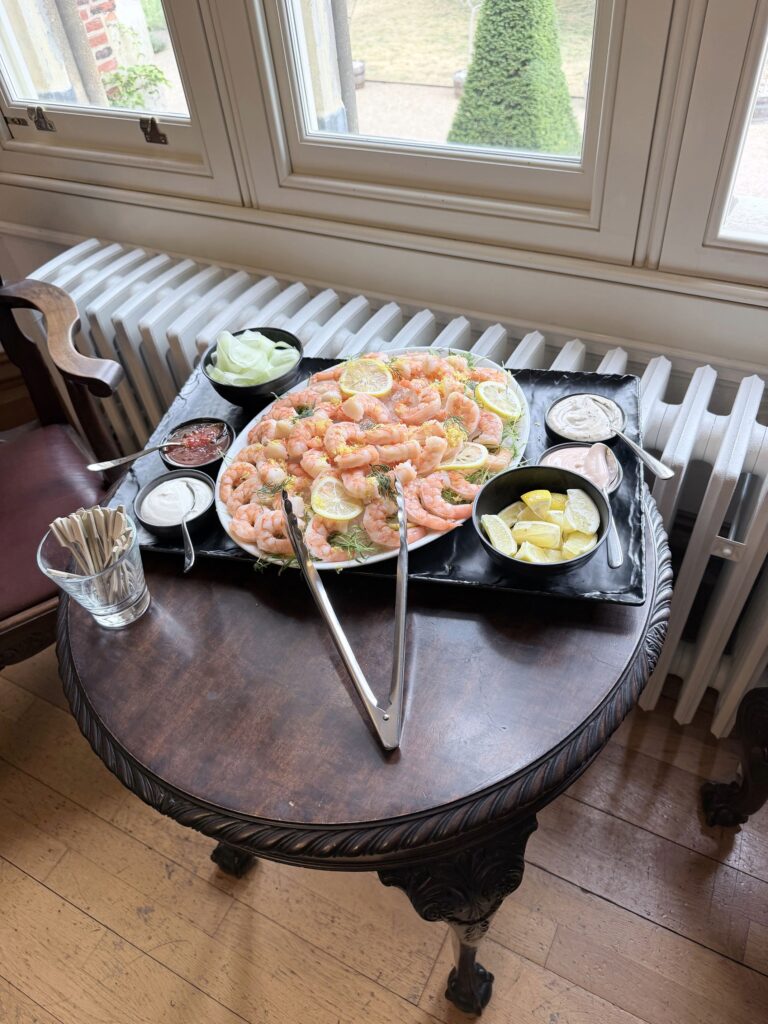
“I hope to share a prawn ring with whoever is living at Lambeth Palace”.
When I stood to speak that day, my intention was to further the debate significantly from what had become Synod’s focus; working class priests. It is undeniable that the Church of England is an upper middle class institution and we must become more representative of all people across the nation. At a fringe event, it was said that “we’re not talking about becoming the Archbishop of Canterbury” and there is the rub; we must be talking about the Archbishop of Canterbury. Inclusion with limitations is not inclusion. Imagine if we were to, rightly, argue greater inclusion of sisters and brothers from GMH backgrounds in the priesthood, without daring to dream higher. The same must be true of all underrepresented groups, including working class people.
We live in a country which has become divided along many lines; exacerbated by quick clicks and sound bites on fast moving social media. Many communities feel excluded from the institutions that society has built over centuries. People feel that they have no agency in their own lives and communities, and that there is an “elite” class of people who make decisions that affect their daily life. Politically, the government has been rolling out Pride in Place programmes across the country to bring together local people to develop a vision for their own community that comes with financial backing to enable a future reality. Real people making real decisions that affect their real lives. I am privileged to chair our local board and encourage the local community to shape the place in which they live. As a church, we must also ensure we have representation at all levels of the church to ensure that decisions are owned across the whole church, and that our structures and processes reflect the different needs and lived experiences of people from different backgrounds.
I have just returned to parish from a week of pilgrimage in Taizé where I was privileged to have lunch with Brother Matthew. As we were discussing the need to grow a more diverse church, he spoke clearly of the need to raise up the right people. If we merely fall into the trap of tokenism, we raise people into offices that they are ill equipped to fulfil. This is neither giving the office holder an abundant life nor enabling people to find their place in the body of Christ. He also said “well you could always tell them that the Prior of Taize is a lad from Pudsey”.
Over two decades have passed since I went to a selection conference to see if a kid from a pit village could train to be a priest in the Church of England. As I reflect on my journey, I realise that there are a thousand little rungs on the ladder that have enabled me to have the confidence to take part in a working lunch with the Archbishop of Canterbury. There are lots of little prods from respected mentors and colleagues that have encouraged me to take more responsibility, develop my leadership and enabled me to hold my own in rooms I never imagined being invited into. I have been directed to sit in chairs I had never thought capable of. I have been asked to take on roles that I have never felt I deserved. And this is the culture we need to foster in order to become a church that draws leadership from the wealth of wonderfully diverse people, we need a range of wonderfully diverse people at every level supporting, encouraging, mentoring and representing their own unique experience of God. We need a variety of different paths that enable people from all backgrounds to develop the gifts that God has given them and the confidence to use them.
Hi Robb,
Thank you for this. I just want to say that although I had no desire to become a Vicar I did know others who were put off because they simply lived in a council house and were told “it wasn’t open to them” because they had no housing security. It seemed really sad to me at the time and I really hope this has passed now, or at least, is on the way of passing.
Pennie